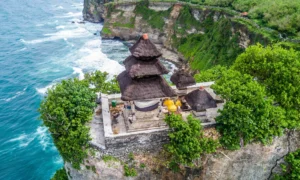
A sacred temple perched above the ocean
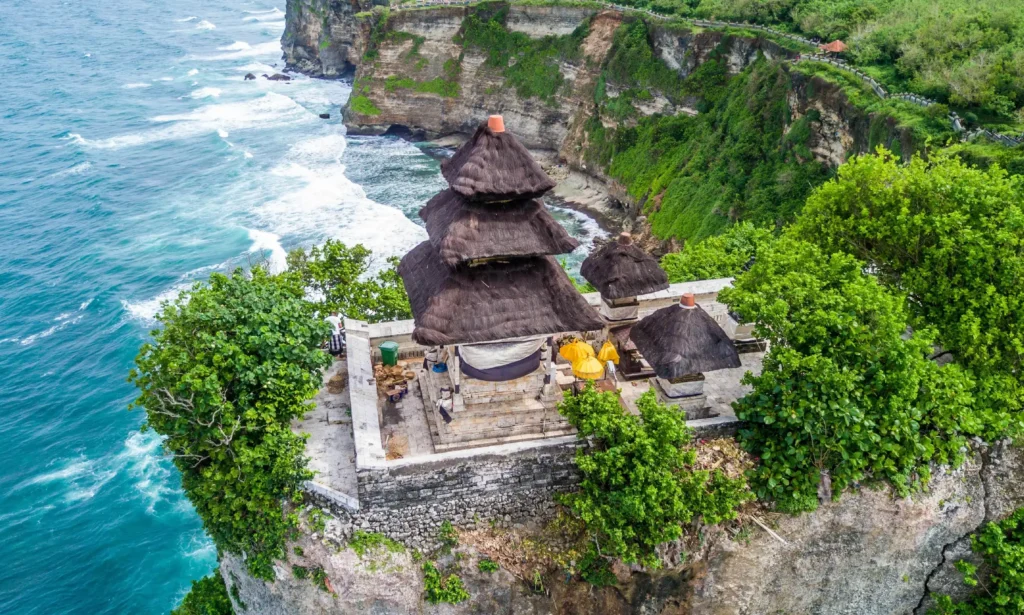
Uluwatu Temple is one of Bali’s most iconic landmarks. Sitting atop a dramatic cliff roughly 70 meters above the Indian Ocean, it offers a breathtaking blend of spiritual architecture and the raw power of nature. Here, the sound of crashing waves meets the gentle rhythm of Balinese prayers, creating a uniquely serene and compelling atmosphere.
One of Bali’s most important spiritual sites
Pura Luhur Uluwatu is recognized as one of the island’s six key spiritual temples. Its clifftop location is deeply symbolic — according to tradition, it protects Bali from negative forces believed to come from the sea.
The temple’s ancient stone gates, carved statues and traditional Balinese ornamentation complement the natural surroundings beautifully.

Cliffside views that define Bali’s coastline
The Uluwatu area is famous for its panoramic vistas, considered among the most striking on the island:
- endless ocean views,
- waves breaking dramatically against the cliffs,
- vibrant sunsets,
- scenic coastal pathways running along the cliff edge.
At sunset, the entire landscape glows with warm colors, highlighting the temple and the surrounding cliffs in a truly magical way.
Kecak — a cultural ritual by the sea
Uluwatu is also known for the evening Kecak fire dance, performed in an open-air amphitheatre overlooking the ocean.
While not part of temple rituals, the dance itself is an important cultural element of Bali, inspired by the epic story of the Ramayana. The setting — high above the sea — makes the experience unforgettable.
The dramatic beauty of Bali’s southern cliffs
The region surrounding Uluwatu offers a glimpse into Bali’s wilder side: steep cliffs, powerful waves and a coastline shaped by natural forces.
It is a landscape that reflects the island’s energy — both spiritual and elemental.